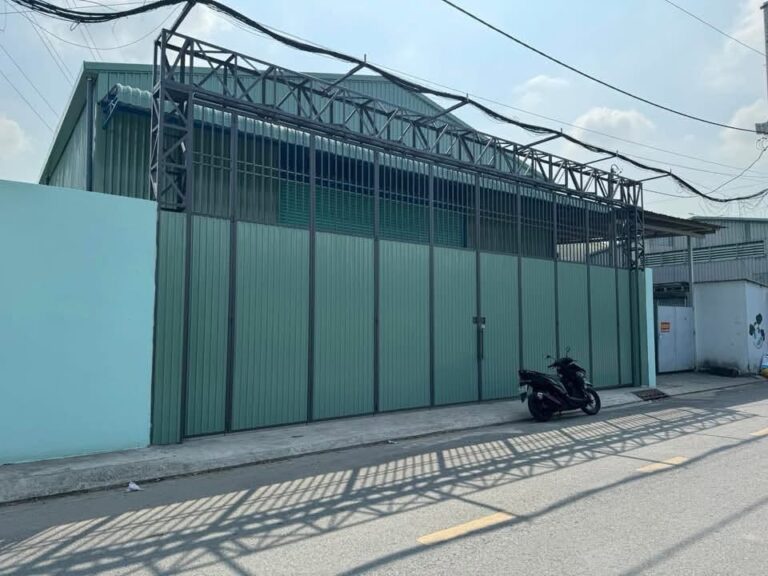
Green Standard Warehouses for European Businesses in Vietnam

Green standard warehouses are facilities designed and certified to meet specific environmental performance criteria, such as energy efficiency, water conservation, and waste reduction. For European businesses in Vietnam, renting a green standard warehouse is a strategic move that supports ESG compliance, reduces operational costs, and aligns with corporate sustainability goals. This guide explains why green standards matter, key certifications, sustainable features, top locations, and how to choose the right warehouse while avoiding common pitfalls.
Why Green Standards Matter for European Businesses in Vietnam

For European companies, sustainability is no longer a head-office talking point — it is a measurable expectation applied to every market they operate in, including Vietnam. Procurement teams, investors and customers increasingly ask supply-chain partners to show environmental data, and a warehouse that cannot support that conversation can become a weak link. Renting a green standard warehouse is therefore less about image and more about staying commercially eligible.
EU Regulations and ESG Compliance
Corporate sustainability reporting rules in the EU are expanding, and larger companies must disclose environmental information across their value chains, not just their own facilities. That means a European manufacturer or logistics operator sourcing space in Vietnam may need to report on energy use, emissions and building performance of the warehouses it leases. Multinational customers also run their own supplier ESG audits, so documentation from your landlord matters.
Choosing ESG-compliant warehouses with recognised certification or verifiable efficiency data makes this reporting far simpler. It also protects the brand: a tenant that can point to green certified factories and sustainable industrial real estate in its network answers stakeholder questions with evidence rather than promises.
Benefits of Green Warehouses
Energy efficiency is the most direct financial gain. LED lighting, insulation, natural ventilation and rooftop solar reduce monthly electricity bills over a multi-year lease — savings that compound as tariffs rise. Water-saving fittings and better waste management add smaller but steady reductions in operating cost.
Vietnamese authorities have shown growing interest in encouraging greener industrial development, and incentives can vary by province, industrial park and project type. Treat any tax or investment support as something to confirm with the park developer or a local adviser rather than a guaranteed benefit. For a practical starting point, review current warehouse for rent Vietnam options in established industrial parks such as Tân Bình or Tân Tạo, where infrastructure and documentation tend to be more complete.
Key Green Certifications for Warehouses in Vietnam
Several international and local certification schemes are used for industrial buildings in Vietnam. Knowing what each one measures helps European occupiers compare a warehouse for rent Vietnam options on a like-for-like basis rather than relying on marketing claims.
LEED Certification
LEED (Leadership in Energy and Environmental Design) is the most widely recognised global benchmark, with Certified, Silver, Gold and Platinum levels. For warehouses, assessors look at energy performance, water efficiency, construction waste management, materials sourcing and indoor environmental quality. A LEED certified warehouse should be able to show a commissioning report and energy modelling, not just a plaque at the gate.
EDGE Certification
EDGE, developed by IFC, focuses on measurable resource savings: typically at least 20% less energy, water and embodied energy in materials compared with a local baseline. It is popular for speculative industrial space because certification is based on design modelling and can be verified after occupancy. Ask for the EDGE preliminary or final certificate and the underlying savings figures.
LOTUS Certification
LOTUS is a Vietnamese green building standard aligned with local climate and construction practice. It covers energy, water, materials, waste and operational performance, and is often used alongside international schemes. Because documentation is in Vietnamese and English, it can be a practical route for landlords targeting both domestic and European tenants.
Certified industrial space is appearing in established parks around Ho Chi Minh City, Binh Duong, Dong Nai and the northern hubs near Hanoi and Hai Phong. Many projects are still in design or pre-certification, so confirm which certificate applies to the specific building and unit, not just the park masterplan.
To verify, request the certificate number, rating level and certifying body, then check the public registry where available. In the lease, look for clauses on energy and water data sharing, fit-out rules, waste segregation, and who bears the cost of maintaining certified systems. These points support ESG-compliant warehouses reporting for your European head office.
Older stock can still be a sound starting point while you assess upgrade costs. For example, this industrial space in District 12 offers container access and practical infrastructure:

High-Ceiling 1,500 m2 Warehouse with Container Truck Access, District 12, HCMC
150 million VND / month
- KCN Tân Bình, Tan Binh, District 12, Ho Chi Minh City
Sustainable Features to Look for in a Green Warehouse

When evaluating a green standard warehouse, look beyond the certificate to the actual systems and design choices that reduce environmental impact and operating costs. These features directly support your ESG reporting and can lower utility bills over time.
Energy and Water Systems
Solar panels on the roof are a common sight in newer industrial parks, helping to offset electricity use and demonstrate renewable energy adoption. Energy-efficient LED lighting with motion sensors cuts consumption in low-traffic areas. Rainwater harvesting systems collect water for landscaping or cooling towers, reducing reliance on municipal supply. Waste management systems—such as segregated bins and recycling programs—are also typical in ESG-compliant warehouses.
Design for Natural Light and Ventilation
Warehouses designed with skylights, translucent roof panels, and operable vents can significantly reduce the need for artificial lighting and mechanical cooling. Good orientation and insulation further minimize heat gain. These passive design features not only lower energy costs but also improve working conditions for staff.
Location and Operational Efficiency
A green warehouse should also be located to minimize transport emissions. Proximity to major highways and container terminals reduces fuel use and travel time. In Ho Chi Minh City, facilities in District 12 or Tan Binh offer easy access to key logistics routes. For example, a factory with overhead cranes and container access on Quốc lộ 1A in District 12 combines operational efficiency with green features.
Factory with 2 Overhead Cranes & Container Access on Quốc lộ 1A, Thạnh Lộc, District 12, HCMC
Contact for price
- Thanh Loc, District 12, Ho Chi Minh City
Checklist for Evaluating Green Features
- Solar panels or renewable energy sources installed or planned
- LED lighting with occupancy sensors
- Rainwater harvesting system
- Waste segregation and recycling program
- Skylights or translucent panels for natural light
- Ventilation systems that reduce reliance on air conditioning
- Insulation and reflective roofing to reduce heat gain
- Location with good access to highways and ports
- Documented energy and water consumption data
- Green certification (e.g., LEED) or equivalent
Use this checklist when touring potential green certified factories or sustainable industrial real estate. Asking for utility data and certification documents will help you verify claims and make informed decisions.
Top Locations for Green Warehouses in Vietnam
Location shapes both your logistics costs and your ability to meet green standards. Vietnam's industrial map is diverse, and some provinces now host a clear concentration of green standard warehouses. Below are the main clusters to consider, with their strengths and practical tips for choosing among them.
Ho Chi Minh City and Surrounding Provinces
Ho Chi Minh City (HCMC) is the commercial hub, with strong road and air links and proximity to Cat Lai and Hiep Phuoc ports. However, land is scarce and rents are high, so many green warehouses for rent in Vietnam are in neighboring provinces. Binh Duong, just north of HCMC, offers large industrial parks with modern infrastructure and growing numbers of LEED certified warehouses and green certified factories. Dong Nai, to the east, benefits from proximity to Cai Mep–Thi Vai deep-water port and major highways, making it attractive for export-oriented manufacturing.
Local incentives for green investments vary by province and should be checked with the industrial park authority. Typically, provinces like Binh Duong and Dong Nai offer support for high-tech and environmentally friendly projects, which may include tax breaks or land-use preferences.
Northern Vietnam: Hai Phong and Bac Ninh
Hai Phong is the north's main port city, with deep-water terminals and expressway connections to Hanoi and China. It has a growing supply of ESG-compliant warehouses, especially in Dinh Vu–Cat Hai economic zone. Bac Ninh, near Hanoi, is a key electronics manufacturing cluster with good road links and proximity to Noi Bai Airport. Green certified factories are increasingly common here, driven by demand from multinational tenants.
Incentives in these areas often target high-tech and supporting industries, and green building features can strengthen your application. Always confirm current policies with local authorities.
Tips for choosing a location: Map your supply chain first. If you rely on sea freight, prioritize proximity to deep-water ports like Cai Mep or Hai Phong. For domestic distribution, being near Hanoi or HCMC reduces last-mile costs. Consider labor availability and your customers' locations. Finally, visit shortlisted industrial parks to assess infrastructure quality and the actual green features of available warehouses.
How to Choose a Green Standard Warehouse: A Step-by-Step Guide

Finding a green standard warehouse in Vietnam is easier when you follow a structured process. Start by defining your operational requirements: size, ceiling height, floor loading, power capacity, and any special handling needs. Then decide which green certifications align with your ESG reporting and corporate targets, such as LEED or EDGE. This clarity will save time when you shortlist properties.
Step 1: Research and Shortlist
Use online listings and local real estate networks to identify candidate green certified factories and warehouses. Verify that the certification is current and applies to the entire building, not just a portion. Request the certificate and the latest energy performance data. Shortlist three to five properties that meet your budget and location criteria.
Step 2: Conduct Site Visits
Visit each shortlisted property and inspect the sustainable features firsthand. Check insulation, lighting, HVAC efficiency, water management systems, and renewable energy installations. Ask for utility bills from the past year to confirm actual consumption. Also assess access for trucks, proximity to ports or highways, and local labor availability.
Step 3: Negotiate Lease Terms with Sustainability Clauses
Include clauses that require the landlord to maintain green certifications and provide annual sustainability reports. Specify targets for energy and water use, and agree on how data will be shared. Consider rent adjustments or penalties if performance falls short. Engage a local legal advisor to ensure these clauses are enforceable under Vietnamese law.
Step 4: Engage Local Experts
Work with a local consultant or agency experienced in sustainable industrial real estate. They can help you navigate the market, verify green credentials, and negotiate favorable terms. They can also introduce you to reputable developers and property managers.
Comparison Table: Key Factors to Consider
| Factor | What to Check | Why It Matters |
|---|---|---|
| Certification | Valid LEED, EDGE, or equivalent; scope covers whole building | Ensures credible green standard and supports ESG reporting |
| Features | Solar panels, LED lighting, rainwater harvesting, waste management | Reduces operating costs and environmental impact |
| Location | Proximity to ports, highways, and labor pools | Affects logistics costs and supply chain efficiency |
| Cost | Rent, service charges, and potential green incentives | Balances budget with long-term savings |
By following these steps and verifying green credentials, you can secure an ESG-compliant warehouse that supports your business goals in Vietnam.
Common Mistakes to Avoid When Renting a Green Warehouse
Even well-prepared European tenants can stumble when securing a green standard warehouses deal in Vietnam. Most problems trace back to a handful of avoidable errors, and knowing them in advance saves both money and credibility with your headquarters.
Watch for greenwashing
Some landlords claim sustainability credentials without documentation. Ask for the actual certificate, its rating level, issuing body and expiry date, and verify claims independently. Marketing language about "eco-friendly design" is not the same as a LEED certified warehouse or a recognised green building rating.
Do not overlook total cost of ownership
A lower headline rent can hide higher electricity, water or maintenance costs, especially in older stock retrofitted with basic features. Model energy use, service charges, fit-out needs and potential savings over the full lease term before comparing options.
Do not ignore local regulations
Fire safety, environmental permits and construction approvals vary by province and should be checked with local advisers. Compliance gaps can delay occupancy or create liability, so confirm the landlord holds the necessary permits for the intended use.
Align with your long-term ESG strategy
Choose a warehouse that supports your company's reporting commitments, not just today's budget. Consider future certification upgrades, renewable energy expansion and tenant reporting obligations. ESG-compliant warehouses that share data openly make annual disclosures far easier.
Negotiate green lease clauses
Push for clauses covering energy and water data sharing, agreed sustainability targets, cost-sharing for efficiency upgrades and reinstatement obligations. Clarify who maintains solar systems and how performance is measured. Involving a local legal and technical adviser during negotiation helps you avoid surprises and secure a lease that genuinely supports your sustainability goals.
Conclusion
Renting a green standard warehouse in Vietnam offers European businesses a way to enhance ESG performance, achieve cost savings, and align with global sustainability trends. By understanding certifications, evaluating sustainable features, choosing the right location, and following a structured selection process, you can secure a warehouse that meets both operational and environmental goals. Avoid common mistakes by verifying claims and negotiating green lease clauses.
Ready to find a green standard warehouse that fits your needs? Browse our listings today to explore available options across Vietnam.
Frequently asked questions
What are green standard warehouses?
Green standard warehouses are facilities designed, built, and operated to meet recognized environmental performance criteria, such as energy efficiency, water conservation, waste reduction, and indoor environmental quality. They often pursue certifications like LEED or EDGE, which verify sustainability features through third-party assessment. These warehouses help businesses reduce their carbon footprint and operational costs while supporting ESG goals.
How do green warehouses help with ESG compliance?
Green warehouses support ESG compliance by providing documented sustainability features that align with environmental criteria, such as reduced energy consumption, renewable energy use, and waste diversion. Certifications offer verifiable data for reporting. Additionally, green leases can include clauses on data sharing and performance targets, helping businesses meet their ESG obligations and demonstrate commitment to stakeholders.
Which certifications should I look for in Vietnam?
In Vietnam, look for internationally recognized certifications such as LEED (Leadership in Energy and Environmental Design) and EDGE (Excellence in Design for Greater Efficiencies), which are increasingly common. Also consider local equivalents like the Vietnam Green Building Council's LOTUS certification. These certifications provide assurance that the warehouse meets specific sustainability standards and help verify green claims.
Are green warehouses more expensive to rent?
Green warehouses may have a higher upfront rental rate due to sustainable features, but they often lead to long-term cost savings through reduced energy and water consumption, lower maintenance costs, and potential tax incentives. The total cost of occupancy can be competitive with conventional warehouses. It's essential to evaluate the full lifecycle costs and negotiate lease terms that share the benefits of sustainability investments.
Can I retrofit an existing warehouse to meet green standards?
Yes, existing warehouses can be retrofitted to meet green standards, though the scope depends on the current condition and desired certification level. Common retrofits include LED lighting, solar panels, water-efficient fixtures, and improved insulation. Retrofitting may be more cost-effective than new construction, but it requires careful planning and verification to ensure compliance with certification requirements.