Ho Chi Minh City Rental Yields: vs Hanoi & Da Nang

Understanding Ho Chi Minh City rental yields is essential for expats and businesses seeking a profitable rental property in Vietnam. This guide compares gross and net yields for whole houses in Ho Chi Minh City with those in Hanoi and Da Nang, highlighting district-level differences and key factors that affect returns. Whether you are an investor or a tenant, this analysis will help you make informed decisions in Vietnam's dynamic rental market.
Understanding Rental Yields for Whole Houses in Vietnam

For expats and businesses renting or investing in Vietnam, rental yield is a key metric. It shows how much income a property generates relative to its value, helping you compare options across cities. For whole house rentals, yields differ from apartments due to land value and maintenance responsibilities.
Gross Yield vs Net Yield
Gross rental yield is the annual rent divided by the property's purchase price or market value, expressed as a percentage. For example, if a house rents for 30 million VND per month (360 million VND per year) and is valued at 6 billion VND, the gross yield is 6%. This simple figure is useful for quick comparisons.
Net rental yield is more accurate: it subtracts annual operating costs from the annual rent before dividing by the property value. The formula is: (Annual Rent – Annual Costs) / Property Value × 100. Net yield reveals the true return after expenses.
Costs That Impact Your Net Yield
Whole house rentals often come with higher and less predictable costs than apartments. Common expenses include:
- Maintenance and repairs: Houses have roofs, gardens, and exteriors that require upkeep. Budget for regular maintenance and occasional major repairs.
- Management fees: If you use a property manager, expect to pay a percentage of the rent, typically 5-10%.
- Taxes: Rental income is subject to personal income tax and other fees; rates vary and should be checked with a local advisor.
- Vacancy: Houses may take longer to rent out, especially in less central areas. Factor in potential void periods.
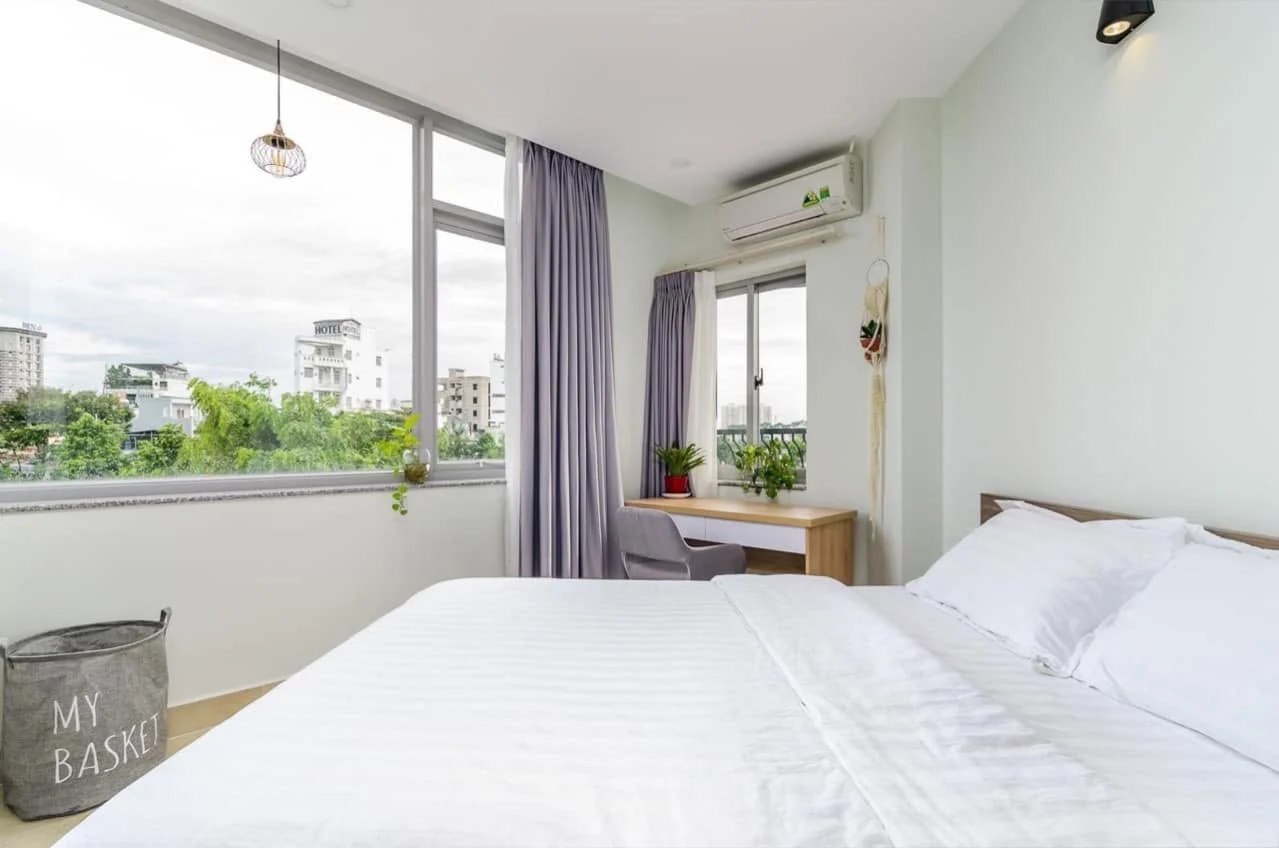
These costs can significantly reduce net yield, so always calculate both gross and net figures. For a practical example of a well-located apartment with clear costs, see this listing in Binh Thanh:

Pet-Friendly 1-Bedroom with Balcony on Nguyễn Ngọc Phương, Bình Thạnh, HCMC
Contact for price
- 1 BR
- Binh Thanh, Ho Chi Minh City
Ho Chi Minh City Rental Yields: District-by-District Overview
Ho Chi Minh City rental yields vary widely by district, and for whole houses the spread is even wider than for apartments. Central areas usually show lower gross yields but steadier tenant demand, while outer districts can offer higher returns with more risk. The ranges below are typical and should be verified against current listings before committing.
Prime Districts
District 1 and the Thao Dien area of District 2 attract corporate tenants and expat families, which supports strong rents but also high purchase prices. Gross yields for whole houses here often sit in a modest single-digit range, with well-maintained properties commanding a premium. Tenant demand is driven by proximity to offices, international schools and serviced amenities.
In Thao Dien, small apartments give a useful reference point for what tenants expect to pay in the area.
Cozy 1-Bedroom Apartment near Nguyen Van Huong, Thao Dien, HCMC
9 million VND / month
- 40 m²
- 1 BR
- Thao Dien, Thu Duc City, Ho Chi Minh City
Emerging Areas
District 7 (Phu My Hung) and Binh Thanh offer a middle ground: established infrastructure, family-friendly neighbourhoods and rents that remain competitive against the city centre. Whole house gross yields here are often higher than in District 1, though maintenance and vacancy should be factored into net figures. Older properties in Binh Thanh can deliver attractive returns if refurbished thoughtfully.
| District | Typical Tenant Profile | Rent Level | Typical Gross Yield |
|---|---|---|---|
| District 1 | Corporate expats, businesses | High | Lower single-digit range |
| District 2 (Thao Dien) | Expat families, professionals | High | Moderate single-digit range |
| District 7 | Families, long-stay expats | Mid to high | Mid single-digit range |
| Binh Thanh | Young professionals, local tenants | Mid | Higher single-digit range |
Rent levels and yields are indicative only and shift with market conditions, so confirm current figures with a local agent.
Hanoi Rental Yields: How Do They Compare?

Key Districts in Hanoi
Hanoi's rental market is concentrated in a few key districts, each with its own tenant profile. Hoan Kiem, the historic center, attracts tourists and short-term renters, but whole house rentals are limited. Tay Ho (West Lake) is popular with expatriates and diplomatic families, offering villas and townhouses with higher rents. Cau Giay and Dong Da are near universities and office hubs, drawing students and young professionals.
Typical gross yields for whole houses in these districts vary: Hoan Kiem tends to have lower yields due to high property prices, while Tay Ho offers moderate yields with stable expat demand. Cau Giay and Dong Da may show slightly higher yields but with smaller unit sizes and more turnover. These are indicative ranges and should be verified with local agents.
Yield Comparison with HCMC
When comparing Hanoi rental yield with HCMC, Hanoi generally shows slightly lower gross yields for whole houses, especially in prime districts. HCMC's expat hubs like Thao Dien and District 7 have deeper rental demand from multinational companies, supporting higher rents. In contrast, Hanoi's expat community is smaller and more concentrated in Tay Ho, which can limit rental growth in other areas.
Tenant profiles differ: HCMC sees more corporate leases and long-term expat families, while Hanoi has a mix of short-term diplomats, NGO staff, and local professionals. This affects vacancy rates and rent stability. Regulatory differences, such as lease registration requirements and taxation, are broadly similar across both cities, but enforcement and local practices can vary. Investors should check current regulations with a local advisor.
Overall, while Hanoi may offer competitive yields in select districts, HCMC's larger expat pool and diverse economy often provide more consistent demand for whole house rentals. For a balanced Vietnam property investment strategy, compare both markets carefully.
Da Nang Rental Yields: A Coastal Alternative
Da Nang attracts a different kind of tenant: beach-oriented expats, families relocating from Hanoi or HCMC, and businesses that need staff housing near the coast. For whole house rentals, this creates a market where location relative to the beach and international schools matters more than proximity to a central business district.
Popular Areas for Rentals
Most whole house demand clusters in a few zones. My An and My Khe beach areas appeal to expats who want walkable beach access and nearby cafes, while An Thuong is popular with longer-stay foreigners and remote workers. Further inland, Hoa Xuan and parts of Hai Chau attract families and Vietnamese professionals who prefer quieter streets and space.
Rent levels in these areas are typically lower than equivalent properties in Thao Dien or central Hanoi, which supports gross Da Nang rental yields that can look competitive on paper. However, the pool of tenants able to commit to a full house is smaller, so vacancy between tenancies tends to run longer than in HCMC.
Yield Potential and Risks
Seasonality is the defining factor. Short-term holiday lets can generate strong income during peak coastal months, but demand drops noticeably in the rainy season, and managing turnover, cleaning and licensing adds cost. Long-term whole house leases smooth out income but usually sit at lower monthly rates.
Compared with HCMC and Hanoi, Da Nang offers a lower entry price and the chance of higher gross yields, but with thinner tenant depth and greater exposure to tourism cycles. A Hanoi rental yield comparison or HCMC benchmark usually reflects steadier year-round demand from corporate tenants. Investors weighing Vietnam property investment should treat Da Nang as a higher-variance option and verify local licensing rules and typical vacancy before committing.
Key Factors Influencing Rental Yields Across Cities

Ho Chi Minh City rental yields do not exist in a vacuum. The same whole house can perform very differently depending on the city it sits in, and four forces explain most of that gap: economic growth and foreign investment, infrastructure, rental supply, and tenant demand. Understanding these drivers helps expats and businesses judge whether a quoted yield is sustainable or just a snapshot.
Economic and Infrastructure Drivers
Ho Chi Minh City remains Vietnam's commercial engine, attracting a large share of foreign direct investment and hosting the country's busiest airport and port system. That concentration supports high-paying corporate tenants and steady demand for whole houses in districts such as District 2 and District 7. Hanoi benefits from being the political and administrative capital, where demand is anchored by government, diplomacy and education rather than pure commerce.
Da Nang relies more on tourism, hospitality and a growing technology sector, so its rental market can be more cyclical. Infrastructure matters everywhere: new metro lines, ring roads and bridges can shorten commutes and lift rents in outlying areas, while congestion or poor connectivity can cap yields in otherwise central locations. Because projects and timelines change, treat any specific infrastructure claim as something to verify locally.
Supply and Demand Dynamics
Rental yield HCMC is also shaped by how much competing stock comes onto the market. A wave of new whole houses or serviced villas in one area can push vacancy rates up and soften rents, even while overall demand grows. Hanoi's rental supply is tighter in central districts, which can support yields but also limits choice for tenants.
Da Nang's supply is more sensitive to tourism cycles and short-term rental conversions. On the demand side, expat families, corporate assignees and local high-income households each behave differently: expats often prioritise international schools and amenities, while local tenants may focus on proximity to work and family. For any Vietnam property investment decision, compare vacancy trends and tenant profiles across all three cities rather than relying on a single headline number.
Maximizing Your Rental Yield: Tips for Investors
Improving Ho Chi Minh City rental yields is less about chasing the highest headline figure and more about disciplined property selection, smart preparation and tight management. The same principles apply whether you compare HCMC with Hanoi or Da Nang.
Property Selection and Renovation
Start with location and target tenant. In HCMC, a whole house near international schools in Thao Dieng or District 7 suits families, while Binh Thanh attracts young professionals. Choose a property in good structural condition to avoid surprise costs, and match the layout to your tenant type.
Renovation should focus on what tenants pay for: reliable internet, air conditioning, water pressure, security and a functional kitchen. Furnishing packages can lift rent, but over-investing in premium finishes may not translate into a higher rental yield HCMC landlords expect. A modest, durable fit-out often delivers the best net return.
Management and Legal Tips
Professional management reduces vacancy and maintenance costs. Use a local agent who understands tenant screening, lease terms and repair coordination. Keep a reserve for vacancy periods, which are typical between tenancies, and review rent annually against the market.
For foreign investors, Vietnam property investment rules on ownership and leasing should be checked with a qualified lawyer. Tax obligations, including rental income tax and any withholding, vary and should be confirmed with an accountant. Clear contracts and proper registration protect both yield and peace of mind.
Conclusion
Ho Chi Minh City rental yields for whole houses vary by district, with areas like District 2 (Thao Dien) and District 7 offering attractive returns due to strong expat demand. Compared to Hanoi and Da Nang, HCMC generally provides higher gross yields but also higher costs and vacancy risks. Investors should carefully consider net yields, local market conditions, and legal factors before committing.
To explore available rental properties and start your search with confidence, browse our listings today.
Frequently asked questions
What is the average rental yield for a whole house in Ho Chi Minh City?
Average gross rental yields for whole houses in Ho Chi Minh City typically range from 4% to 7%, depending on the district and property type. Prime areas like District 1 tend to have lower yields (around 4-5%), while emerging expat hubs such as District 2 and District 7 may offer 5-7%. Net yields are lower after deducting costs like maintenance, management, and taxes.
How do rental yields in Ho Chi Minh City compare to Hanoi?
Ho Chi Minh City generally offers slightly higher gross rental yields for whole houses compared to Hanoi, particularly in expat-favored districts. Hanoi's yields range from 4% to 6%, with prime districts like Hoan Kiem and Tay Ho at the lower end. However, Hanoi has a more stable rental market with lower vacancy rates in some areas, which can improve net yields.
Is Da Nang a better market for rental yields than Ho Chi Minh City?
Da Nang can offer competitive yields, especially for properties near the beach and in tourist areas, with gross yields potentially reaching 6-8% for short-term rentals. However, Da Nang's market is more seasonal and volatile, with higher vacancy risks outside peak tourist periods. Ho Chi Minh City provides more consistent year-round demand, making it a safer choice for steady rental income.
What costs should I deduct to calculate net rental yield?
To calculate net rental yield, deduct all operating expenses from gross rental income. Common costs include property management fees (typically 5-10% of rent), maintenance and repairs, property taxes, insurance, vacancy periods, and furnishing costs. For foreign investors, additional considerations like remittance fees and tax obligations should also be factored in to get an accurate net yield.
Can foreigners buy and rent out houses in Vietnam?
Foreigners can buy apartments and, in some cases, houses in Vietnam, but ownership is limited to a 50-year leasehold (renewable) and a cap on the number of units per building. Renting out is allowed, but foreign landlords must comply with tax regulations and may face restrictions on property types. It's advisable to consult a legal expert to understand the latest rules before investing.